Advantages of Digital Signal Processing: Advantages of DSP are Ease of Processing, Thermal Drift and Reliability, Repeatability, Immunity to Noise, Programmability, and possibility of Some Special Signal Processing Techniques.
Books for All Competitive Exams
Advantages of Digital Signal Processing
- Ease of Processing
- Thermal Drift and Reliability
- Repeatability
- Immunity to Noise
- Programmability
- Some Special Signal Processing Techniques
Join EEE Made Easy Whatsapp Channel
DIGITAL SIGNAL PROCESSING
One of the advantages of a discrete-time signal is time division multiplexing. The second advantage of discrete-time signals is that they can be digitized, and they can be processed either using digital hardware or using software.
For the digitization, firstly, the discrete time signal which can take any value in the range (–Am, Am) where Am denotes the maximum amplitude of the signal, is approximated to one of the 2N levels which is closest to the signal.
The approximation error is called the quantisation error, and it can be made small by choosing N to be large.
The 2N levels may be chosen to be at equal intervals in the range (–Am, Am) in which case the signal
is said to be uniformly quantized.
The next step is to represent each of these 2N levels by an n-bit number. The number of bits, n, is given by log22N. Processing the n-bit numbers corresponding to the various samples of the signal is called digital signal processing.
It offers a number of advantages compared to processing the continuous-time signal directly. The latter approach is also called analog signal processing if the signal amplitude range is also continuous.
ADVANTAGES OF DIGITAL SIGNAL PROCESSING (DSP)
Ease of Processing
One of the requirements in signal processing is to delay the signal by a particular duration. For example,
in moving target indicator radar, a number of pulses are transmitted one after another and the received
signal corresponding to adjacent pulses are to be subtracted. This requires the received signal to be
delayed by one pulse repetition interval. For the analog signal processing, this is achieved using an acoustic
delay line. Increasing or decreasing the delay requires the delay line length to be changed which is
cumbersome. On the other hand, for DSP, the samples of the received signal can be stored in memory
and they can be read after one pulse repetition interval. Delay can be easily changed without switching
in or switching out cables.
Thermal Drift and Reliability
For analog signal processing, circuits consisting of analog components like resistors, capacitors, and
op amps are used and their characteristics change with temperature. DSP circuits use digital hardware
like adders, multipliers and shift registers whose characteristics show no variation with temperature
throughout their operating range. Component aging alters the performance of the analog circuit. For
example, the dielectric material of capacitors is particularly prone to aging which changes the impedance
and alters the performance. DSP circuits have the same performance throughout their lifetime.
Repeatability
Component tolerance makes the analog circuit to have different characteristics with different set of
components of same nominal value. For example, a resistor with 100 W resistor with 10% tolerance can
have any value in the range (90, 110) W. Accordingly, the circuit behaviour cannot be exactly predicted.
This problem can be minimised by using components with smaller tolerance. But this increases the
system cost as these components are costly. Typical capacitors have a tolerance of 20% or worse. This
makes the characteristics of an analog circuit to be poorly repeatable with new set of components with
same nominal values. Digital circuits, however, are inherently repeatable.
Immunity to Noise
In analog signal processing, the signals are allowed to take any value within a particular range and noise
can easily alter the magnitude. In DSP, the signals take binary values and for altering a 1 to 0 and vice
versa a noise voltage of a large magnitude is required. In digital data transmission, the effect of noise
can be completely eliminated by putting repeaters at suitable intervals. However, a repeater used with an
analog signal will amplify both signal and noise and will be ineffective in combating the noise.
Programmability
DSP functions can be implemented either using microprocessors/microcontrollers or Programmable
Digital Signal Processors. This enables the same hardware confi guration to be reprogrammed to perform
a very wide variety of signal processing tasks by loading in different software. In the analog case this
would call for rewiring/resoldering.
Some Special Signal Processing Techniques
Some signal processing techniques cannot be performed by analog systems. Examples of
these techniques are linear phase filters, notch filters, adaptive filters, data compression, error control
coding. In control systems, an example is a deadbeat controller used when a very rapid settling time is
required.
Join EEE Made Easy Whatsapp Channel
Join EEE Made Easy Telegram channel
Download & Install EEE Made Easy App
Books for All Competitive Exams
Latest Posts in EEE Made Easy
- Best Books for Transformer Design and Electrical Machine Design
 Best Books for Transformer Design and Electrical Machine Design: If you are studying Transformer Design, Electrical Machine Design or Design … Read more
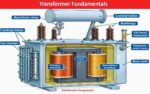
 - Transformers FundamentalsTransformers Fundamentals: Transformers are static devices that transfer electrical energy from one circuit toanother by the phenomenon of electromagnetic induction … Read more
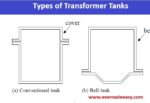
- Transformer Tank Types|Classification of Transformer TanksTransformer Tank Types: Depending upon the position of the joint between the upper and lower parts, wehave two types of … Read more
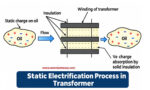
- Static Electrification in transformersStatic Electrification in transformers: Generation of static charges, caused by oil streaming on a solid insulating component, is responsible for … Read more
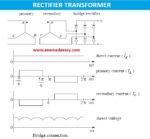
- Special TransformersSpecial Transformers: There are some special transformers like Rectifier Transformers,Converter Transformers for HVDC,Furnace Transformers and Phase Shifting Transformer. Special Transformers … Read more
- Magnetostriction and its ill effectsMagnetostriction and Its ill-effects:The property of ferromagnetic materials, due to which their dimensions are changed due to change of magnetic … Read more
- Losses in a TransformerLosses in a Transformer:The losses which occur in an actual transformer are: (i) Core or iron losses (ii) Copper losses … Read more