Question
As the load is applied to a synchronous motor, the motor takes more armature current because
(a) The increased load has to take more current
(b) the rotor by shifting its phase backward causes motor to take more current
(c) the back e.m.f decreases causing an increase in the motor current
(d) The rotor strengthens the rotating field causing more motor current
Answer
The answer is option d. The rotor strengthens the rotating field causing more motor current.
Explanation
As the load is applied, the rotor poles will then have a larger phase angle relative to the rotating stator field, and the power factor will start to lag as well.
As we increase the load, the motor becomes more and more out of phase and draws more current as the poles move further away from the idling position until they pass a point of no return, then the motor suddenly stalls or burns up.
Read More HERE
- Read Here Synchronous machines notes and MCQs
- Read about Synchronous Machines
- Construction of Synchronous Machines
- Read Here Electrical and Mechanical Degrees in Synchronous Machines
- Synchronous Machines Advantages and disadvantages
- Parallel operations of Alternators
- Synchronous machines MCQ 3
- Synchronous machines MCQ 2
- Synchronous machines MCQ 1
- Single phase alternator|Synchronous Generator
- Three-phase alternator|3 phase Synchronous Generator
- 25 MCQs on 8051 Microcontroller- Set 2
- 25 MCQs on 8051 Microcontroller
- Transformer MCQs – Set 3
- 25 Transformer MCQs – Set 2
- 25 MCQs on Transformers
- Basics of Transformer Ratings and KVA rating
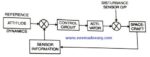
- Satellite Altitude and Orbit Control( AOCS)

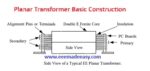
- Planar Transformer
- Best Books for Transformer Design and Electrical Machine Design
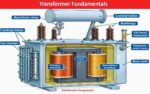
- Transformers Fundamentals
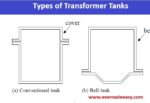
- Transformer Tank Types|Classification of Transformer Tanks
- Static Electrification in transformers